
A Simple Mindset Shift That Changes Everything
Book Review: The Let Them Theory by Mel Robbins There’s something refreshing about a self-help concept that doesn’t ask you to overhaul your entire life, wake up at 5am, or manifest your way into emotional stability. Mel Robbins’ The Let Them Theory offers something far simpler and arguably far more powerful: the idea that peace […]
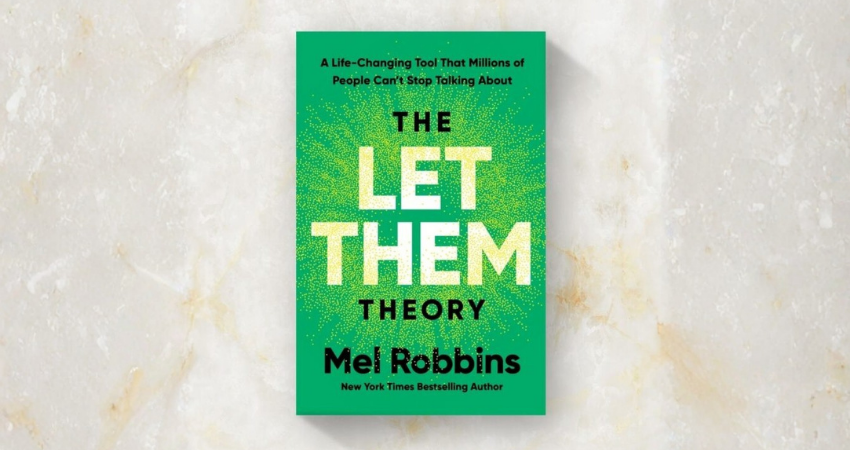
Book Review: The Let Them Theory by Mel Robbins
There’s something refreshing about a self-help concept that doesn’t ask you to overhaul your entire life, wake up at 5am, or manifest your way into emotional stability. Mel Robbins’ The Let Them Theory offers something far simpler and arguably far more powerful: the idea that peace begins the moment you stop trying to control other people.
At its core, the “Let Them” theory is built around two words that sound almost too casual to be life-changing: let them. Let them be annoyed. Let them misunderstand you. Let them make choices you wouldn’t make. Let them act in ways that feel unfair, disappointing, or confusing. Because the moment you stop gripping tightly to what other people do, you loosen the grip their behaviour has on you.
Robbins’ message is blunt in the best way: you cannot control how other people think, feel, or act and the more you try, the more exhausted you become.
The Illusion of Control
One of the strongest takeaways from this book is how clearly it exposes the emotional labour many of us carry without even realising it. So much of our daily stress comes from trying to manage reactions that aren’t ours to manage.
We over-explain because we want to be understood. We people-please because we want to be liked. We hold back because we fear judgement. We spiral because someone else’s mood shifts.
Robbins reminds us that this is not peace but emotional over-functioning. It’s living as though we are responsible for everyone else’s comfort, approval, or choices.
The “Let Them” approach interrupts that pattern.
Instead of spending energy asking Why are they like this? or How do I fix this?, Robbins suggests a shift: Let them. Let them show you who they are. Let them have their opinion. Let them do what they want. Because what they do is information not a personal assignment for you to solve.
What makes this concept so impactful is that it doesn’t come from apathy or cold detachment. It comes from emotional maturity.
“Let them” does not mean you don’t care. It means you care without losing yourself.
Mel emphasises that letting go is not giving up, it’s choosing freedom. When you stop trying to control others, you reclaim control over the only thing you actually own: your response.
The “Let Me” Part
A valuable extension of the theory is what Robbins often pairs with it: Let me. Let them behave however they choose, let me choose how I want to show up, let me set boundaries, let me protect my energy, let me move forward.
This is where the book becomes more than a catchy phrase. It becomes a practice of self-respect. Robbins encourages readers to redirect their focus inward not in a selfish, but grounded way.
Instead of asking, How do I get them to treat me differently?, you ask, What do I need right now? That shift is subtle, almost life changing.
Mel writes in her usual conversational style – direct, energetic, and easy to follow. The book is filled with examples that feel familiar: friendship dynamics, family tension, workplace stress, romantic disappointment, and the everyday burden of caring too much.
The strength of the book lies in its accessibility. You don’t need to be deeply immersed in psychology to understand it. It’s a mindset tool you can apply immediately in conversations, conflicts, and in moments where you feel yourself spiralling into frustration or hurt.
An Idea That Sticks
If there’s one reason The Let Them Theory resonates, it’s because it addresses something most of us struggle with: letting go. Letting go of control, expectations, the constant need to be perceived a certain way.
Robbins doesn’t pretend this is easy. But she offers a reminder that feels grounding: other people will do what they do. The question is whether you want to spend your life reacting or living.
In a world where everyone is overstimulated, overthinking, and emotionally stretched, Let Them is a quiet permission slip. Because when you stop trying to control how other people act, think, or feel, you don’t lose power but reclaim it. And with that comes something rare: peace.
If this review has inspired you to pick up The Let Them Theory, I’d also recommend tuning into Mel Robbins’ podcast. It’s the best way to really hear her voice, energy, and no-nonsense tone that adds so much depth to the reading experience.
About the Author
Related articles

This Great Gaming Series Loses Itself in the Finale
Review: Life is Strange Reunion In 2015, developer Don’t Nod released the first episode of Life is Strange (back then, episodic adventure games were all the rage). Over the course of that five-episode first season, players would grow to love photographer protagonist Max Caulfield and her anarchist friend Chloe Price. The game was filled with […]

5000 Years of Civilisation Laid Bare
Review: Goliath’s Curse: The History and Future of Societal Collapses, Luke Kemp, Penguin In his book of collapsology, Luke Kemp turns much received wisdom about barbarism and civilisation on its head. It’s the product of an enormous amount of research and contemplation, and it’s a goliath of a book, partly because he tends to repeat […]

Questioning Christianity Today
Review: Don’t Forget We’re Here Forever, Lamorna Ash, Bloomsbury We hear much about simultaneous decline and revival in Western Christianity but there isn’t another book on contemporary Christianity quite like Lamorna Ash’s. The writer of a previous book on the Cornish fishing industry, in this new book she likewise takes a very personal approach, immersing […]