
Plur1bus Episode 3 Turns Loneliness into Defiance
Note: This commentary contains spoilers for Episode 3 of Plur1bus Episode 3 of Plur1bus titled “Grenade” opens by deepening the isolation of Carol Sturka (Rhea Seehorn) who remains the un-joined individual in a world now subsumed by the hive-mind. A flash-back to a trip Carol and her partner Helen take to an ice-hotel gives emotional […]

Note: This commentary contains spoilers for Episode 3 of Plur1bus
Episode 3 of Plur1bus titled “Grenade” opens by deepening the isolation of Carol Sturka (Rhea Seehorn) who remains the un-joined individual in a world now subsumed by the hive-mind.
A flash-back to a trip Carol and her partner Helen take to an ice-hotel gives emotional context to Carol’s grief and her inability to be swept into the new consensus. In this memory, Carol’s mismatch with the moment – grumbling in the cold, restless in the surreal setting – contrasts with Helen’s delight. This past moment stands as a last connection Carol had as herself.
In the present, the hive-mind offers Carol service, efficiency and omnipresent help, but what she receives unsettles her. At one point she asks for a hand-grenade — sarcastically at first — and the hive-mind delivers with dire consequences.
What emerges is a theme of connection that’s compulsory rather than chosen. The hive-mind has reorganised society: grocery stores are emptied, electricity is shut down at night for “efficiency,” resources are centralised. Carol finds her local store bare — then, because she complained the hive restocks it with rapid-fire logistics.
Christian reflection often places freedom of the self and relational love alongside the temptation of imposed unity or pacified conformity. Carol’s decision to refuse the hive’s “care” is not simply stubbornness but an allegiance to the self-that-chooses. She is lonely not because she is entirely alone but because she is the one rejecting the world’s easiest path to “togetherness.” That rejection feels almost sacrificial: she declines the meal prepared for her, she demands autonomy; she endures being the odd one out.
Dialogue captures this too. When the hive-avatar Zosia says: “We’re affected by your emotions… if they’re directed at us, they can be a little tough to take,” the script reveals the cost of Carol’s individuality: her pain and anger have real impact on the hive-mind. It’s as though her emotional self remains the last un-hiveminded piece of humanity—and the collective both fears and needs it. That duality signals isolation: she is necessary yet apart.
The episode raises questions of belonging, freedom and sacrifice. What worth is unity if it demands surrender of interior life? What value is individual will if left unfettered yet unsupported? In Carol we find someone who remains outside, yes – but not disconnected by accident. She stands there in order to remember what connection is supposed to mean: chosen, respectful, relational – not coerced, absorbed, flattened.
This episode’s strengths lie in how it concretises the abstract idea: the many becoming one isn’t just a gimmick, it becomes the lived reality of society in this new world.
Looking ahead, Episode 3 suggests the war is not just external (Carol vs hive) but internal: will she remain human when everything around her demands she conform? The faith-inflected question becomes: can genuine connection exist when selfhood is surrendered? Carol’s solitude is her strength – but will it remain sustainable?
Episode 3 of Pluribus deepens its interrogation of connection, isolation and identity. Loneliness here is not lack of company but refusal of assimilation. Connection here is not communion but control. And identity here is not individuality alone but the capacity to choose relationship – or to reject what is offered so that something truer can be sought.
About the Author
Related articles

This Great Gaming Series Loses Itself in the Finale
Review: Life is Strange Reunion In 2015, developer Don’t Nod released the first episode of Life is Strange (back then, episodic adventure games were all the rage). Over the course of that five-episode first season, players would grow to love photographer protagonist Max Caulfield and her anarchist friend Chloe Price. The game was filled with […]
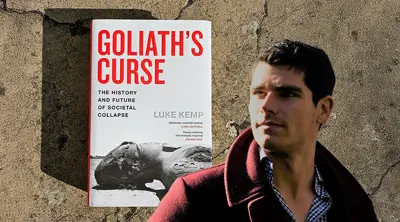
5000 Years of Civilisation Laid Bare
Review: Goliath’s Curse: The History and Future of Societal Collapses, Luke Kemp, Penguin In his book of collapsology, Luke Kemp turns much received wisdom about barbarism and civilisation on its head. It’s the product of an enormous amount of research and contemplation, and it’s a goliath of a book, partly because he tends to repeat […]
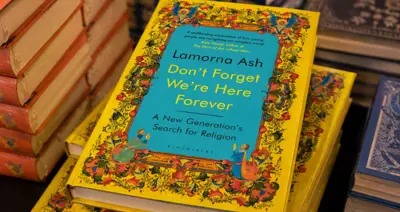
Questioning Christianity Today
Review: Don’t Forget We’re Here Forever, Lamorna Ash, Bloomsbury We hear much about simultaneous decline and revival in Western Christianity but there isn’t another book on contemporary Christianity quite like Lamorna Ash’s. The writer of a previous book on the Cornish fishing industry, in this new book she likewise takes a very personal approach, immersing […]