
The Imago Dei in the Age of AI
We live in a time where artificial intelligence is starting to do things we once thought only humans could do—write poems, diagnose diseases, create art, even offer relationship advice. As AI grows in capability, we’re left with big questions: What makes us human? Where do we find our worth? And what sets us apart from […]
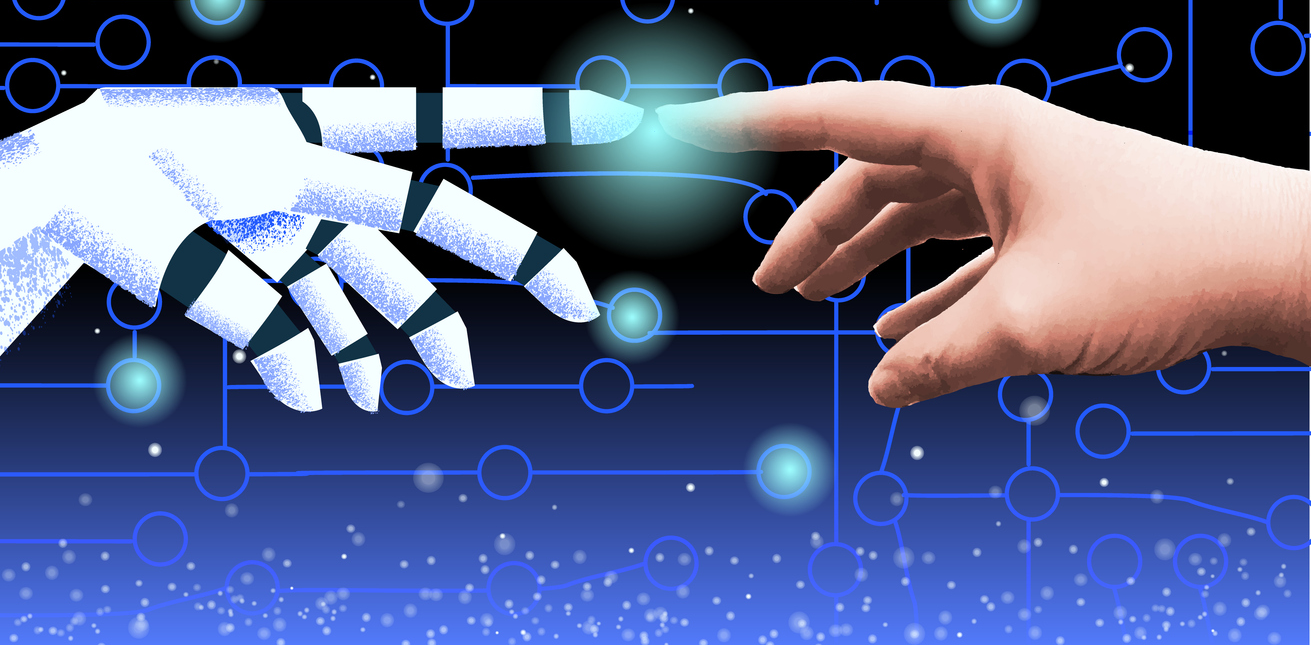
We live in a time where artificial intelligence is starting to do things we once thought only humans could do—write poems, diagnose diseases, create art, even offer relationship advice. As AI grows in capability, we’re left with big questions: What makes us human? Where do we find our worth? And what sets us apart from machines?
The Bible tells us that we are made in the imago Dei—the image of God (Genesis 1:27). It’s a powerful phrase, but also one that has often been trimmed down to ideas like reason, creativity, or moral decision-making. The problem is, AI can now reason (in some sense), create, and make decisions based on ethical programming. So if we’ve pinned the imago Dei on what we can do, we’ve built it on shaky ground.
That’s where awe and mystery come in.
Being made in God’s image is not just about functions or abilities. It’s not a list of tasks we can perform better than a machine. It’s about relationship. It’s about likeness to a God who creates, yes, but who also loves, forgives, suffers, and redeems. And more than anything else, it’s about how God made himself known—in the person of Jesus Christ.
Colossians 1:15 calls Jesus “the image of the invisible God.” If we want to understand what it means to be made in God’s image, we have to look at Jesus. And when we look at him, we don’t just see power or intellect. We see humility. We see compassion. We see someone who touched lepers, ate with outcasts, wept at funerals, and washed his friends’ feet. That’s the image we’re called to bear.
So what does that mean in a world where machines can now imitate so much of what we do?
It means our worth doesn’t come from what we produce. It doesn’t come from our intelligence or efficiency or usefulness. These are things we’ve often used to judge value—in ourselves and in others. But Scripture doesn’t talk like that.
In Psalm 8, the writer looks at the stars and asks, “What is mankind that you are mindful of them, human beings that you care for them?” (v. 4). It’s a fair question. The cosmos is vast. We are small. And yet God says we matter. Not because we’re useful, but because we’re known. Because we’re loved. Because we’re made in his image.
This is what sets us apart from AI. Machines can learn patterns and make predictions. They can simulate personality. But they cannot love. They cannot be loved in the way we are by God. They do not carry the mark of the Creator. They do not bear the weight of glory (2 Corinthians 4:17).
And because we are made in God’s image, we carry agency. Not just the ability to choose, but the responsibility to reflect God in how we live. In how we relate. In how we care. Machines follow code. We are called to follow Christ.
Romans 8:29 tells us that God’s goal is to shape us into the likeness of his Son. That’s what the imago Dei points to—not static traits, but a calling. A direction. We are being made into something. Not machines that work flawlessly, but people who love sacrificially.
So in this AI age, it’s easy to feel unsure. It’s easy to think we’re being replaced or left behind. But no machine can bear God’s image. No algorithm can embody Christ. No chatbot can sit beside a friend in grief with nothing to offer but presence and shared tears.
As AI grows in influence, we will need to guard against a shallow view of humanity. We’ll need to remind ourselves—and each other—that we are not measured by speed or output. We are not valuable because we are impressive. We are valuable because we are loved into being by a God who made us to reflect him.
That’s the mystery.
That’s the awe.
And that’s the invitation—to live as people shaped not by what the world says is important, but by the one who made us, calls us, and dwells with us still.
“Dear friends, now we are children of God, and what we will be has not yet been made known. But we know that when Christ appears, we shall be like him” (1 John 3:2).
About the Author
Related articles

The Church’s Next Digital Reformation May Already Be Here
When people talk about artificial intelligence and Christianity, the conversation often swings between panic and prophecy. Either AI is about to destroy authentic faith, or it will somehow usher in a new spiritual awakening. But according to Bobby Gruenewald, the more uncomfortable reality is that technology and faith are already inseparable. That observation matters because […]

Why I Deleted Social Media
A Personal Reckoning with the Algorithm On 25 April 2026, I deleted my accounts on Facebook, Instagram, Snapchat, BlueSky, X/Twitter, TikTok, and LinkedIn. Not deactivated. Deleted. The data, the followers, the years of curated digital existence: gone. I kept Substack for long-form writing and YouTube for my podcast and teaching videos. Everything else I let […]

Andor’s Prescient and Urgent Reflection on Truth
Warning: This article contains spoilers for Andor, Rogue One and Star Wars: A New Hope. Andor has wrapped up its second and final season. The Disney Star Wars television show follows the adventures of Cassian Andor as he participates in the rebellion against the Galactic Empire after Imperial stormtroopers destroy his entire tribe as a […]