
The Penguin Lessons
Note: This analysis contains spoilers for The Penguin Lessons. The Penguin Lessons is a beautiful, surprising gem of a movie, based on the memoir of British teacher Tom Michell. Michell taught English at an exclusive private boy’s school in Argentina in the 1970’s when it was on the brink of revolution. Sometime in the past, […]
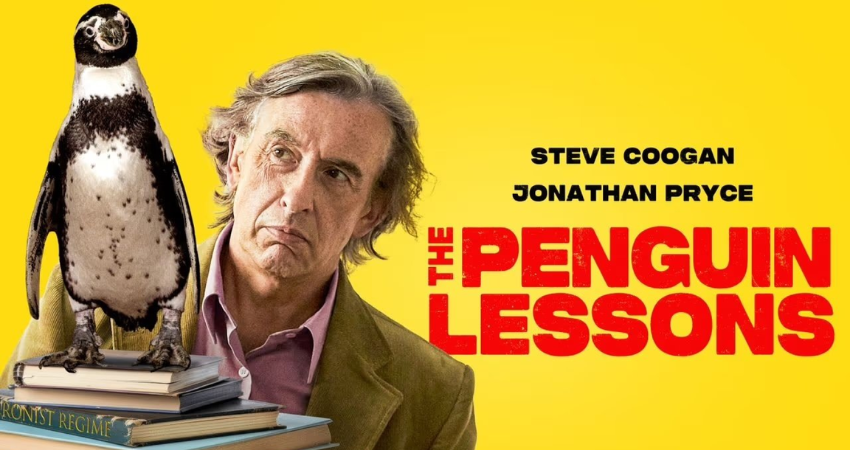
Note: This analysis contains spoilers for The Penguin Lessons.
The Penguin Lessons is a beautiful, surprising gem of a movie, based on the memoir of British teacher Tom Michell. Michell taught English at an exclusive private boy’s school in Argentina in the 1970’s when it was on the brink of revolution. Sometime in the past, his thirteen-year-old daughter had been killed by a drunk driver. The tragedy had destroyed his marriage and Michell, disillusioned and lost, became an itinerant educator making his way from the United States, down through various countries in South America.
While the school is closed for a week due to the military coup d’état, Michell makes his way to Uruguay for a holiday. In an attempt to impress a woman, he saves the one surviving Magellanic Penguin from an oil spill that has killed several others. They take it back to the hotel, clean it up in the bathtub, and from that time on, the penguin would not leave his side.
The “lost” teacher had accidently found a companion.
Michell couldn’t get rid of the flightless bird, so he managed to smuggle it back to the school where it became part of the life of students and teachers alike. He helped deliver lessons, enjoyed swimming in the pool, and became a motivator for the boy’s behaviour. Eventually, he was given the name Jaun Salvador.
When Juan Salvador suddenly dies, one of the students comforts Michell. He observes that penguins mate for life. Its partner had died, and as such, the time that Michell, teachers, students, and cleaners had with Juan Salvador was time that would not normally occur. The penguin gave of itself in its final months and days.
The relationship with Juan Salvador had helped Michell escape his self-protective isolation. He didn’t get involved in politics or the sides of the revolution. When he witnesses the kidnapping of Sofia, his cleaning lady’s granddaughter, he begins to converse with the penguin about the situation, his guilt for not stepping in, and his subsequent failure to do anything. He eventually has the courage to go up to the kidnapper on the street and ask for her release, which results in his arrest, subsequent beating, and being held overnight in the police station. His experience, however, results in his feeling better about himself than he has in years. The penguin’s patient “listening” without judgement or offering solutions, results in healing, building courage, and practicing honesty. The teacher who has “lost” his way and no longer cares about teaching, himself, or anyone else, is taught to love.
Juan becomes a treasured confidante, not only for Michell, but other teachers, Michell’s cleaner Maria, and even the school Principal. They share their joy and happiness, pain and sorrows, express their anger, fears and concern, pose their existential questions, and begin to reflect back on their own lives and insecurities. This small penguin listened without any judgement, without any insights, and without any reply. It simply “was”. Jaun’s presence was a comfort in a time of unsettling instability and violence. That “listening” somehow enabled growth and change in the sharers. They stood up to evil. They protested the coup. They invested in their students. They began to care and empathise with others.
Imagine if we did the same with God. If speaking to one of God’s silent creatures results in such dramatic changes, imagine what speaking to the Creator does! A Creator who loves us, a Creator who sees us, a Creator who knows us better than we know ourselves. A Creator who does respond – through the insights of others, through the revelation of Scripture, through the glory of nature, and even, occasionally, through signs, wonders, or an audible voice.
Dr Katherine Grocott is a theologian, contemporary jeweller and educator. www.katherinegrocott.com.au.
About the Author
Related articles

This Great Gaming Series Loses Itself in the Finale
Review: Life is Strange Reunion In 2015, developer Don’t Nod released the first episode of Life is Strange (back then, episodic adventure games were all the rage). Over the course of that five-episode first season, players would grow to love photographer protagonist Max Caulfield and her anarchist friend Chloe Price. The game was filled with […]
5000 Years of Civilisation Laid Bare
Review: Goliath’s Curse: The History and Future of Societal Collapses, Luke Kemp, Penguin In his book of collapsology, Luke Kemp turns much received wisdom about barbarism and civilisation on its head. It’s the product of an enormous amount of research and contemplation, and it’s a goliath of a book, partly because he tends to repeat […]
Questioning Christianity Today
Review: Don’t Forget We’re Here Forever, Lamorna Ash, Bloomsbury We hear much about simultaneous decline and revival in Western Christianity but there isn’t another book on contemporary Christianity quite like Lamorna Ash’s. The writer of a previous book on the Cornish fishing industry, in this new book she likewise takes a very personal approach, immersing […]