
“The Promised Land” Finds Holy Humour in the Wilderness of Faith
The Bible is a pretty hot property at the moment with the character-based drama of The Chosen, the fantasy stylings of House of David, and the modern-day dystopian take of Acts in Testament. They all show how recent Bible adaptations are experimenting with genre and storytelling. Now comes The Promised Land – a mockumentary about […]
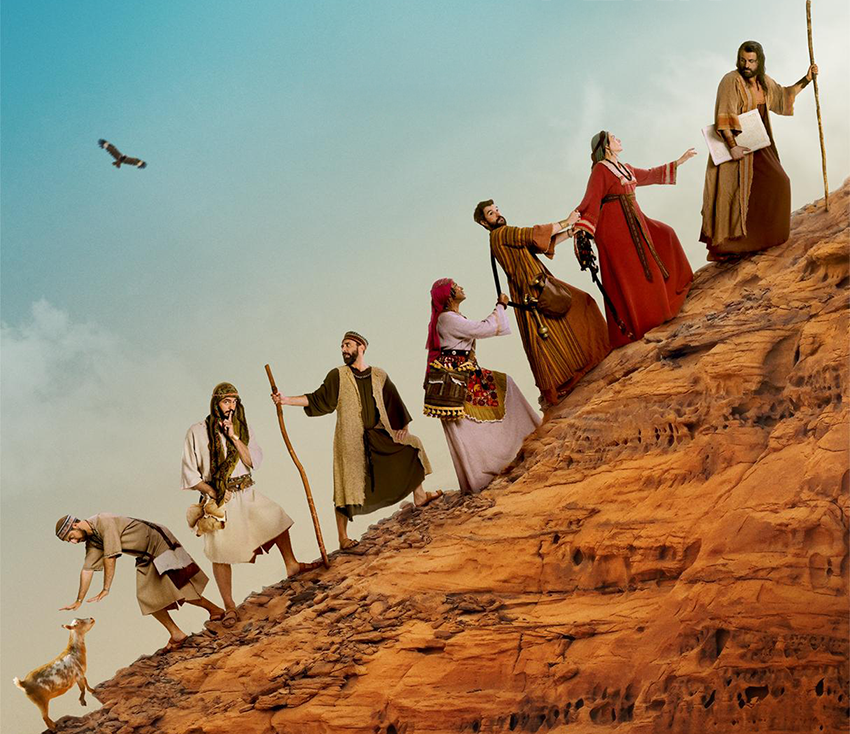
The Bible is a pretty hot property at the moment with the character-based drama of The Chosen, the fantasy stylings of House of David, and the modern-day dystopian take of Acts in Testament.
They all show how recent Bible adaptations are experimenting with genre and storytelling. Now comes The Promised Land – a mockumentary about Moses leading the Israelites through the wilderness. On the surface this sounds irreverent, even risky. But writer-director Mitch Hudson finds humour in the human side of holiness, treating Moses not as a marble hero but as an exhausted leader trying to manage an unruly community. With it’s fourth-wall brakes and characters talking to the camera, it’s like a workplace comedy, set in biblical times.
In the pilot, Moses (Wasim No’mani) is overwhelmed until his father-in-law Jethro (Tucker Smallwood) advises him to appoint helpers – a story straight from Exodus 18. His wife Zipporah (Tryphena Wade) clashes with his sharp-tongued sister Miriam (Shereen Khan), echoing Numbers 12. It’s the Bible filtered through the tone of The Office, and surprisingly, it works. The pilot’s success led to a six-episode first season, now streaming on YouTube.
Episode 2 builds on the premise, set at Mount Sinai before the giving of the Law. Moses appoints leaders over different groups, prompting grumbling from his ambitious cousin Korah (Brad Culver). Joshua (Artoun Nazareth) guards the mountain while Moses tries, unsuccessfully, to relax. The series shines when exploring these lesser-known scriptural moments, imagining how human frailty, envy, and pride played out beneath the thunder of divine revelation.
The show also gives voice to sidelined figures. Miriam, frustrated at being overlooked by her brothers, tries to organise a women’s meeting tent. Her storyline feels fresh and grounded, even when played for laughs.
Episode 3 takes place during Moses’ forty days on the mountain. Instead of rushing to the golden calf incident, the episode lingers with the Israelites as they grow restless. Aaron’s loss of authority unfolds with weary inevitability. When the idol finally appears, the show balances humour with seriousness—though it softens the biblical punishments. The resulting tension leaves the tone uncertain: sometimes earnest, sometimes absurd.
Later episodes find a better rhythm. A subplot about a reluctant craftsman working on the tabernacle becomes unexpectedly moving, while Miriam and Zipporah disguising themselves with fake beards to sneak into a men’s covenant study recalls the show’s early playfulness. At its best, The Promised Land draws gentle laughs from bureaucratic squabbles and spiritual confusion, reminding viewers how human these ancient figures really were. At its weakest, it relies too much on mockumentary clichés like characters staring at the camera.
For Bible enthusiasts, the series offers plenty of rewarding detail. Nahshon, ancestor of King David, appears as the leader of Judah, and Oholiab – the artisan in charge of yarn and linen – insists on being called “Oho.” These small touches both amuse and educate, making even obscure verses memorable.
Season 1 ends with the building of the tabernacle and Aaron’s ordination, carrying the story through the end of Exodus and into Leviticus. Creator Mitch Hudson plans 40 episodes in total, which means future seasons will need to slow down to capture the Israelites’ long wandering. That may actually help the show. Its finest moments come when it lingers – examining how Moses, Miriam, and the rest struggle to live faithfully amid confusion, doubt, and divine mystery.
The Promised Land isn’t a spoof of scripture. It’s a playful and creative exploration of what holiness looks like among flawed people. The jokes land best when they reveal truth: that leadership is exhausting, that faith is messy, and that God’s people have always been a handful.
Season Two, to be filmed in Morocco, is already in development. For now, The Promised Land proves that laughter might be a great way to engage with the stories from the Old Testament.
Watch The Promised Land Season 1 on YouTube.
About the Author
Related articles

This Great Gaming Series Loses Itself in the Finale
Review: Life is Strange Reunion In 2015, developer Don’t Nod released the first episode of Life is Strange (back then, episodic adventure games were all the rage). Over the course of that five-episode first season, players would grow to love photographer protagonist Max Caulfield and her anarchist friend Chloe Price. The game was filled with […]
5000 Years of Civilisation Laid Bare
Review: Goliath’s Curse: The History and Future of Societal Collapses, Luke Kemp, Penguin In his book of collapsology, Luke Kemp turns much received wisdom about barbarism and civilisation on its head. It’s the product of an enormous amount of research and contemplation, and it’s a goliath of a book, partly because he tends to repeat […]
Questioning Christianity Today
Review: Don’t Forget We’re Here Forever, Lamorna Ash, Bloomsbury We hear much about simultaneous decline and revival in Western Christianity but there isn’t another book on contemporary Christianity quite like Lamorna Ash’s. The writer of a previous book on the Cornish fishing industry, in this new book she likewise takes a very personal approach, immersing […]